Raw Milk Listeria Risk & Digital Food Thermometer Safety
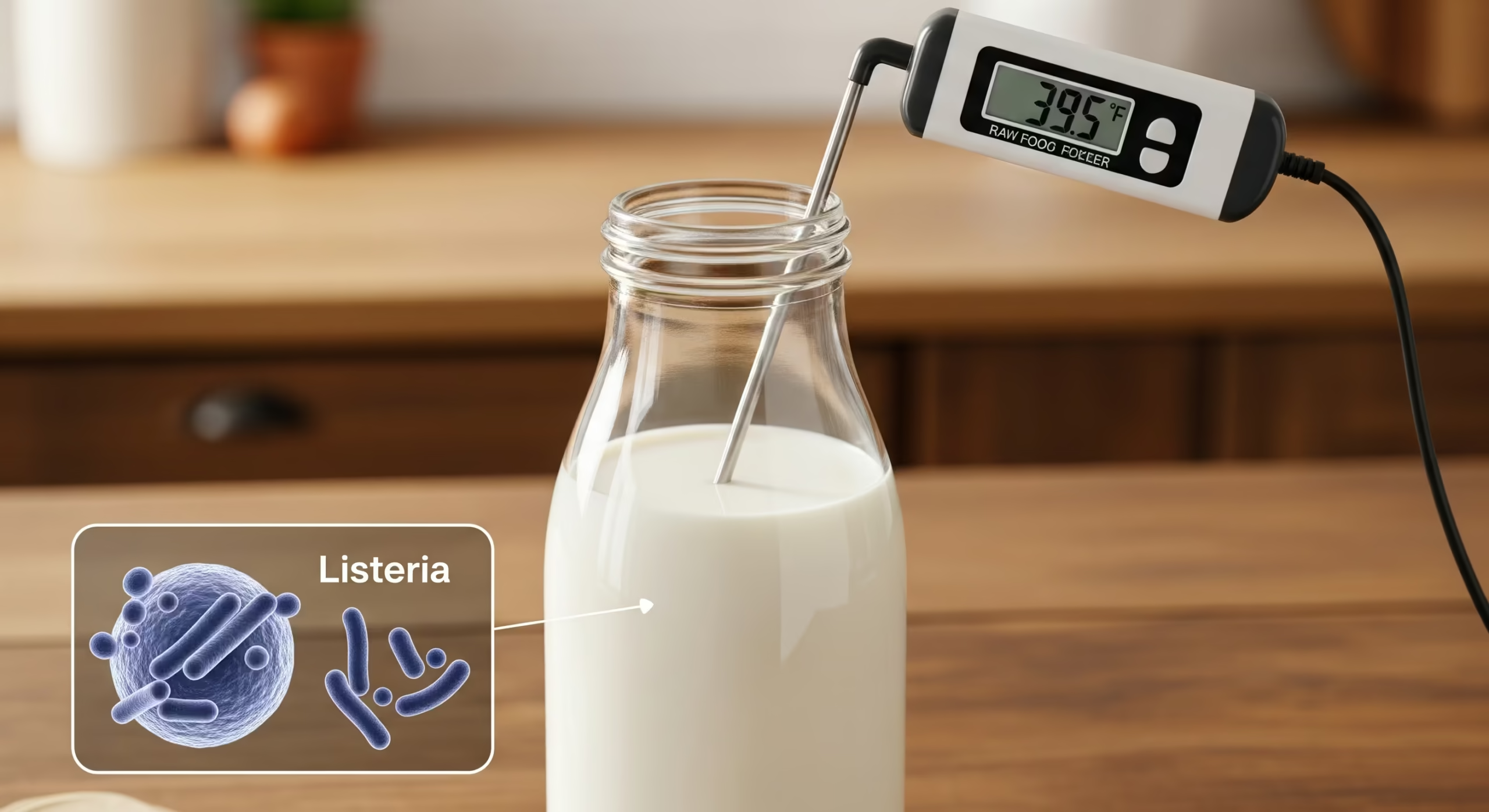
Raw milk enthusiasts may sing its praises about how delicious it tastes when it’s fresh and how good it is for you because of its added nutrients. Maybe you have seen the claims going around online saying it’s good for your stomach and even prevents allergies. Well, the big problem with raw milk’s goodness is that there are concealed risks lurking around every corner, including the risk of Listeria bacteria.
This is a guide that digs deeper into the raw milk Listeria risk. We will explore how this bacteria works well in raw milk products and why it is indeed a threat. The best part is that we will also show you how to use your digital food thermometer safety to achieve control if you choose to go this route. Let’s think of this as your roadmap to better decision-making.
Understanding the Listeria Threat in Raw Milk
Listeria hides in plain sight, waiting to strike. It loves cool spots like your fridge, making raw milk a prime spot for trouble. Many folks don’t realize this until it’s too late.
What is Listeria monocytogenes?
Listeria monocytogenes is a tough bacterium that causes listeriosis, a nasty infection. This germ stands out because it’s a psychrotroph—it grows even in the chill of refrigeration, down to about 32°F. Listeriosis hits hard, with symptoms like fever, muscle aches, and nausea that can lead to hospitalization or worse in severe cases. The CDC reports thousands of infections yearly in the US, and raw dairy often plays a role.
You won’t always spot it right away. It can take days or weeks for signs to show. That’s why experts warn against raw milk for anyone who wants to avoid this sneaky foe.
Routes of Contamination in Raw Milk Production
Dirt and germs lurk everywhere on a farm. Cows can carry Listeria in their manure, which spreads to udders during milking. Equipment like pails or pipes that aren’t spotless adds more risk, letting bacteria hitch a ride into the milk.
Without pasteurization, nothing kills off these invaders. Environmental sources, like wild animals or soil, can taint feed or water too. A single lapse in hygiene turns fresh milk into a potential hazard before it even reaches your door.
Outbreaks trace back to these farm slip-ups. The FDA has linked raw milk to multiple cases, showing how contamination happens fast in production.
High-Risk Populations and Severe Outcomes
Not all persons deal with the effects of Listeria in the same way, however. Pregnant women are the ones mostly concerned about contracting the disease, as the baby could suffer from miscarriages or developmental problems if the mother contracts it during pregnancy. Infants, the elderly, and those with poor immune systems, including those undergoing chemotherapy, are the next in line.
For these groups, a case of listeriosis isn’t just a bad day. Symptoms can result in meningitis or sepsis, killers that claim 20 percent or more in hard cases, depending on data from the CDC. For healthy adults, their system might clear the disease as a flu, but why gamble?
This is driven home by public health alerts, which warn of outbreaks of illnesses associated with raw milk consumption, while states monitor outbreaks of illnesses associated with raw milk consumption, advising users to exercise caution if they fall in certain categories of risk. If you belong to this category, you could be saving your life by avoiding it altogether
Pasteurization: The Proven Path to Safety
Heat changes everything when it comes to milk safety. Pasteurization zaps germs without ruining the flavor much. It’s the simple fix that keeps families healthy.
The Science of Pasteurization
Pasteurization heats milk to at least 161°F for 15 seconds. This quick blast kills harmful bacteria like Listeria while keeping proteins and vitamins mostly intact. Ultra-pasteurization cranks it higher, to 280°F for two seconds, for longer shelf life.
The goal stays the same: slash pathogen levels to safe zones. Milk tastes creamy and fresh after, not boiled. Science backs this—decades of studies show it cuts illness risks big time.
You get the benefits of milk without the worry. No wonder it’s the standard in stores everywhere.
Comparing Pathogen Kill Rates: Raw vs. Pasteurized
Raw milk teems with live bugs. Tests show it can hold high levels of E. coli, Salmonella, and Listeria—up to millions per milliliter in bad batches, according to FDA labs. After pasteurization, those numbers drop to near zero, often undetectable.
For Listeria alone, heating wipes out 99.999% or more. The CDC notes pasteurized milk links to far fewer outbreaks than raw. Side-by-side, raw samples fail safety checks way more often.
This data isn’t guesswork. It’s from real-world monitoring that proves heat wins the battle against germs.
Regulatory Stance and Legal Landscape
The FDA flat-out advises against raw milk sales across state lines. They call it a high-risk food due to Listeria and other threats. Many states ban it outright, while others allow limited farm sales with strict rules.
Local laws vary—check yours before buying. Health departments track illnesses to enforce these. The gap is clear: regulations aim to protect you from untested raw dairy dangers.
Ignoring this can lead to recalls or shutdowns. Stick to guidelines, and you avoid the legal and health headaches.
Precision Temperature Control: Digital Thermometers as a Safety Barrier
Cold isn’t always enough if you’re not checking it right. A digital food thermometer steps in as your best friend here. It gives you facts, not guesses, for safer storage.
Why Standard Thermometers Fail for Home Safety
Old-school glass thermometers take forever to read—30 seconds or longer! And they’re usually off by several degrees, which is important when Listeria is an issue! In a busy kitchen, this could mean you might miss a warm spot in your milk!
The analogues on the fridge also lie since the inside is actually warmer than the reading on the analogues. On the other hand, for raw milk, accuracy matters since even a small degree in temperature is enough for bacteria to multiply, hence the need to switch to the digital types.
No more second-guessing. These tools detect problems quickly, ensuring that your food stays out of harm’s way.
Selecting the Right Digital Food Thermometer
Look for one with a response time under three seconds. Accuracy within ±1°F is key, especially for the 32°F to 212°F range you’ll use. Many come with auto-calibration or easy buttons to adjust.
Choose instant-read probes for quick checks on milk jugs. For ongoing monitoring, grab a leave-in probe that beeps alerts. Brands like ThermoPro or Lavatools offer reliable picks under $20.
Probe length matters—longer ones reach deep into containers without mess. Waterproof designs clean up easy after spills. With these features, you’ll handle raw milk storage like a pro.
Recommended Digital Food Thermometers for Raw Milk Safety
If you’re serious about reducing raw milk Listeria risk, a reliable digital food thermometer is essential. Here are some top-rated options available on Amazon:
- ThermoPro TP19H Digital Food Thermometer
Fast 2–3 second readings, waterproof design, and ±1°F accuracy. Ideal for checking milk temperature quickly. - Lavatools Javelin PRO Duo
Ultra-fast response time, auto-rotating display, and professional-grade accuracy for precise food safety control. - Taylor Precision Digital Kitchen Thermometer
Budget-friendly, easy to use, and perfect for everyday milk temperature monitoring.
Click here to check the latest prices on Amazon and keep your family safe.
Actionable Steps: Monitoring Raw Milk Storage Temperatures
Keep your fridge at 40°F or below— that’s the magic number for slowing Listeria. Use your digital thermometer to check the milk itself, not just the air. Dip the probe in a glass sample every few hours if you’re storing longer.
Calibrate weekly: test in ice water at 32°F and boiling at 212°F. Log readings to spot trends, like a fridge that’s creeping up overnight. If it hits 45°F, move the milk or toss it.
These steps build a safety net. They turn vague habits into solid routines that cut risks.
Implementing Safe Handling and Minimal Risk Practices
Bacteria love the middle ground—not too hot, not too cold. Stay out of that zone with raw milk, and you’ll dodge most trouble. Simple habits make a big difference.
Establishing the “Danger Zone” for Bacterial Growth
The danger zone runs from 40°F to 140°F, where Listeria doubles every hour or so. Raw milk left out during a picnic or on the counter invites rapid growth. Keep it chilled, and that clock slows to a crawl.
Every minute counts in this range. A forgotten jug at room temp for two hours could spike germ levels. Fridge it quick, and you buy time—up to a week for fresh raw milk.
Watch for signs like curdling. Pull it back to cold storage right away to stay safe.
Best Practices for Home Milk Testing (If Applicable)
Home tests for Listeria aren’t foolproof—they miss low levels. Skip DIY kits unless you’re a pro; they’re pricey and often inconclusive. Focus on clean hands, sanitized counters, and separate cutting boards to avoid cross-contamination.
Wash the milk container with hot soapy water before use. Store in glass, not plastic, to cut chemical leaching. If you must test, send samples to a lab, but that’s overkill for most.
Hygiene trumps testing every time. These steps lower odds without fancy gear.
Safe Disposal and Recognizing Spoilage
Toss raw milk after five to seven days, even if it looks fine. Sniff for sour smells or check for clumps—those scream spoilage. If it’s past date or from a sketchy source, don’t risk it.
Pour it down the drain with a bleach chaser to kill germs. Never feed spoiled milk to pets; Listeria hits them too. Clean the fridge shelf after to prevent spread.
Spotting bad batches early saves hassle. Trust your senses backed by that digital thermometer read.
Conclusion: Informed Choice and Non-Negotiable Safety Metrics
Raw milk has a built-in risk from Listeria spores that even home tricks cannot overcome. Pasteurization remains the gold standard to kill germs without sacrificing too much goodness. If you choose to eat raw milk despite those risks, you should be aware of the implications for you if you’re vulnerable.
Your strongest defense against overcooked food and foodborne pathogens comes from digital food thermometers, which guarantee precise internal cooking temperatures that promote slower bacterial growth rates and quickly alert you to potential issues.
Select wisely and support decisions based on facts instead of hype. Grab a good quality thermometer today and follow safe storage practices. Also, ask your doc about the risks associated with raw dairy products. Give your health the extra care it needs.


0 Comments