Infrared No-Touch Thermometers Guide
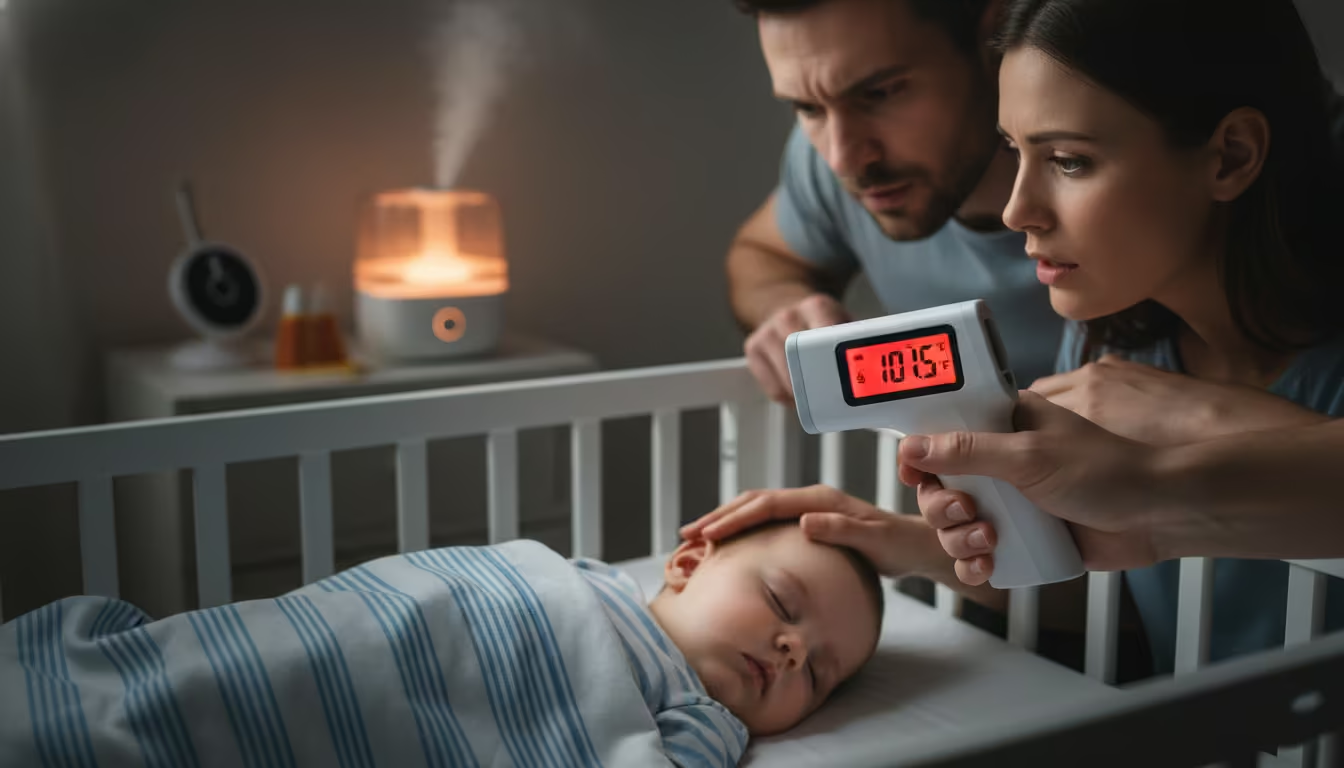
Modern families, schools, hospitals, and childcare facilities are choosing a safer and more convenient way to check body temperature—infrared no-touch thermometers. These devices allow you to measure temperature without placing anything in the mouth, ear, or under the arm. Instead, they detect heat emitted from the forehead and deliver fast results within seconds. As a result, they’ve become one of the most popular types of thermometers worldwide, especially for parents, nurses, and workplaces that monitor many people at once.
In this guide, you’ll learn how these thermometers work, how accurate they are, how to use and calibrate them correctly, and which models stand out as the best choices. Whether you’re shopping for a family device or researching for a business, this article breaks it down simply and clearly.
What Are Infrared No-Touch Thermometers?
An infrared no-touch thermometer measures the heat that naturally radiates from the surface of the skin—usually the forehead. Instead of touching the body, the device uses an infrared sensor to detect temperature from a short distance.
Most devices fall into two categories:
- General no-touch infrared thermometers – handheld, digital models used for both adults and children.
- No-touch infrared forehead thermometers – specifically designed to scan forehead temperature instantly.
Because there’s no physical contact, they’re hygienic, fast, and comfortable, especially for children or sleeping babies. This technology has made at-home health checks easier and has become a standard in public places like schools, offices, and medical clinics.
Benefits of Using a No-Touch Infrared Thermometer
No-touch thermometers offer several advantages that make them a convenient choice:
Fast results: Most models give a reading in 1–2 seconds
Hygienic: No need to sanitize after every use
Safe for group settings: No contact means reduced germ transmission
Ideal for children: Scan the forehead without waking them
Easy to read: Large digital displays and fever indicators
Many buyers choose these devices because they require less effort and provide consistent, repeatable results. A traditional oral or underarm thermometer can be uncomfortable, especially for kids. A no-touch infrared thermometer solves that problem with near-instant forehead scanning.
How Accurate Are No-Touch Infrared Thermometers?
A common question is: are no touch infrared thermometers accurate?
Yes—when used properly. Many models, including the iHealth infrared no-touch forehead thermometer and Braun no touch infrared thermometer, are medically validated and designed for clinical or home use.
Accuracy depends on a few conditions:
- The device must be held at the correct distance (usually 1–2 inches)
- The forehead should be clean and dry
- The user should avoid measuring immediately after exercise or sun exposure
- Room temperature should be stable
So while they are accurate, how accurate are no touch infrared thermometers in comparison to other types? In most cases, they can be just as precise as oral or tympanic (ear) thermometers when directions are followed correctly. Many hospitals also use them because they reduce contamination risk.
If a device produces inconsistent readings, calibration or incorrect use is often the cause—not the technology itself.
How to Use a No-Touch Infrared Thermometer Properly
To get a reliable reading, it’s important to follow proper technique. Here is a simple step-by-step guide covering how to use a no touch infrared thermometer:
- Make sure the person is indoors and has rested for a few minutes
- Clean the forehead and remove sweat, makeup, or dirt
- Hold the thermometer at the recommended distance (usually printed on the device)
- Aim at the center of the forehead
- Press the measurement button and wait for the beep
- Read the digital temperature displayed
If you’re specifically using a no-touch infrared forehead thermometer, the steps are the same. Most models, including the iHealth no touch infrared thermometer, provide silent vibration or backlit screens so readings can be checked at night without disturbing children.
Quick Tips for Best Results:
- Avoid pointing at hair or eyebrows
- Take multiple readings if the person just came indoors from heat or cold
- Keep the sensor lens clean for the most accurate scan
How to Calibrate a No-Touch Infrared Thermometer
Even a high-quality digital infrared no-touch thermometer may need calibration over time. Calibration ensures that the device gives accurate temperatures and is especially important for hospitals or childcare centers that test many people daily.
Here’s how to calibrate:
- Turn the device on and let it adjust to room temperature
- Follow your model’s instruction reset steps
- Compare with a medically accurate thermometer
- Adjust using the manual or automatic calibration setting
These steps apply to both how to calibrate no touch infrared thermometer and how to calibrate no touch infrared forehead thermometer. Some brands automatically self-calibrate, while others require manual confirmation. Most calibration instructions are included in the iHealth infrared no-touch forehead thermometer manual or packaged instructions.
If your thermometer still gives inconsistent readings, cleaning the sensor or replacing batteries often fixes the issue.
Best No-Touch Infrared Thermometers to Consider
If you’re shopping for a reliable device, certain models consistently rank well in speed, accuracy, and ease of use. When people search for the best no touch infrared thermometer or the best no touch infrared forehead thermometer, they are usually comparing features such as reading speed, display quality, memory storage, and battery life.
Below are some stand-out options that fit different needs:
iHealth infrared no touch forehead thermometer – Very popular for home use, silent vibration alert, large display, quick scanning
Braun no touch infrared thermometer – Trusted medical brand, dual forehead + object mode, great for families
Medline infrared no touch forehead thermometer – Often used in healthcare settings due to strong accuracy
Homewell Essentials no-touch digital infrared thermometer – Affordable choice with a simple design
Sunbeam infrared no-touch forehead wand thermometer – Wand style for quicker scanning in group environments
Digital infrared no touch thermometer (generic models) – Budget-friendly options with standard features
If you are wondering what is the best no touch infrared thermometer overall, many parents and caregivers choose the iHealth or Braun models because of their reliability, quiet operation, and user-friendly screens. For large groups, school clinics, or elder care facilities, Medline and Sunbeam are popular because they hold up well to frequent use.
Product Reviews & Consumer Favorites
Reviews matter, especially when purchasing medical devices. Let’s take a look at feedback commonly mentioned in popular no touch infrared thermometer reviews across well-known brands:
iHealth infrared no-touch forehead thermometer reviews
Users love the silent vibration alert, which avoids loud beeps at night. The device is quick, clean, and easy to use on kids or sleeping babies.
Homewell Essentials no-touch digital infrared thermometer reviews
Many reviewers mention that it is budget-friendly and simple, making it a good household starter thermometer.
iHealth pt3 infrared no-touch forehead thermometer reviews
This updated version includes improved distance sensors and backlit numbers for nighttime reading.
Chicco infrared forehead no-touch thermometer reviews
Families appreciate its baby-friendly design and soft color-coded fever indicators.
Gurunanda, Homedics & other brand reviews
These brands often receive positive feedback for smooth scanning and affordable pricing. In Homedics no-touch infrared thermometer reviews, users note its intuitive one-button operation and clear display.
When reading reviews, the most common pros include:
- Fast, 1–2 second reading time
- No need for disposable covers
- Gentle on babies and kids
- Hygienic across multiple family members
The most common complaints are usually related to incorrect distance usage, low batteries, or testing too soon after outdoor activity—which affects accuracy. Following instructions typically resolves these issues.
Brand Spotlights: Popular Models Worth Comparing
To make buying easier, here’s a simple comparison view:
| Brand / Model | Best For | Highlights |
|---|---|---|
| iHealth infrared no touch thermometer | Families and at-home use | Silent vibration alert, simple display, medically accurate |
| Braun no touch infrared thermometer | Kids and multi-use | Can measure objects/liquids, well-known brand |
| Medline infrared no touch forehead thermometer | Healthcare centers | Durable, reliable for frequent measurements |
| Homewell Essentials no-touch digital infrared thermometer | Budget shoppers | Easy to operate, affordable |
| Sunbeam infrared no-touch forehead wand thermometer | Schools & workplaces | Wand style allows fast scanning for groups |
| Digital infrared no touch thermometer | Quick, everyday use | Low-cost alternative for home or travel |
Choosing comes down to accuracy, ease of use, and your environment. A family only needs a simple, reliable forehead model—while a nursing home or office might want a wand-style device for fast screening.
No-Touch vs Tympanic Thermometers: Which Is More Accurate?
Many people compare no-touch infrared models with ear (tympanic) thermometers. Both are considered medically reliable, but they work differently.
No-Touch Forehead Thermometers:
- No contact, more hygienic
- Safer for infants and children
- Works for sleeping babies
- Fast and convenient
Tympanic (Ear) Thermometers:
- Also accurate, but require insertion in the ear canal
- Not recommended for newborns
- Can be uncomfortable for some children
So, which is more accurate: no touch infrared or tympanic thermometer?
Both can be accurate when used properly, but infrared forehead scanners have an advantage in hygiene and comfort. Many parents and healthcare facilities have switched to them for convenience and safety.
Common Problems & Troubleshooting
Most issues are simple and fixable. If your thermometer gives unusual readings, try the following:
Clean the sensor lens — fingerprints or dust can block sensors
Ensure proper distance — too close or too far affects accuracy
Check batteries — low power can cause inconsistent readings
Allow time after coming indoors — body temperature changes with weather
Use a clean, dry forehead — sweat or water lowers readings
If you have a model like the iHealth infrared no-touch forehead thermometer, the device manual usually includes troubleshooting steps, button functions, and temperature scale adjustments.
Final Thoughts
Infrared no-touch thermometers have become one of the easiest and safest ways to check temperature at home or in group settings. They’re fast, non-invasive, and reduce the risk of spreading germs. With many trusted brands—like Braun, iHealth, Medline, Sunbeam, Homedics, and Homewell Essentials—there’s a reliable option for every family or facility.
When you know how to use the device correctly and calibrate it when needed, you can count on accurate temperature readings whenever someone feels unwell


0 Comments